
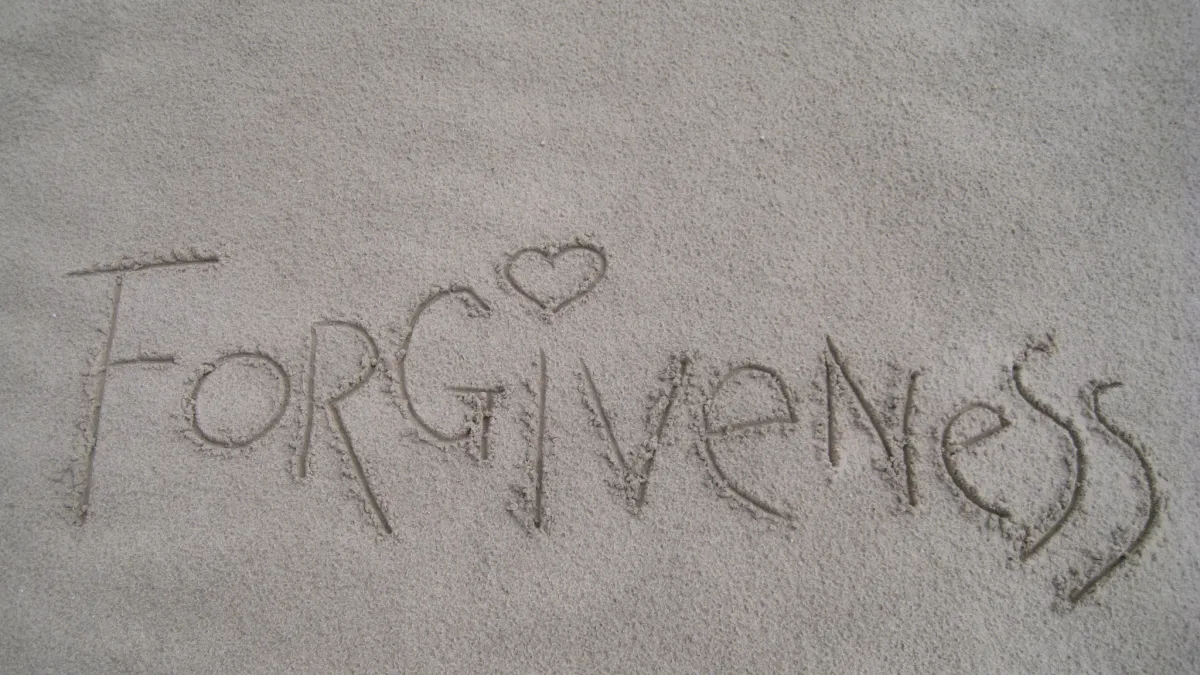
The Past Called. It Wants Its Energy Back.
Chandra Eden, The True Me Yogi
You Can Heal Your Lfe
Author: Louise Hay
“To Release the Past, We Must Be Willing to Forgive - We need to choose to release the past and forgive everyone, ourselves included. We may not know how to forgive, and we may not want to forgive, but the very fact that we say we are willing to forgive begins the healing process. It is imperative for our own healing that 'we' release the past and forgive everyone.
'I forgive you for not being the way I wanted you to be. I forgive you and I set you free.'"
The Past Called. It Wants Its Energy Back.
Forgiveness is one of those concepts people love in theory and absolutely hate in practice.
Everybody posts inspirational quotes about it. Everybody nods wisely when someone says, “You need to let go.” And meanwhile half the population is lying awake at 2:13 a.m. replaying a conversation from 2009 where someone had the audacity to breathe incorrectly in their direction.
Because forgiveness sounds spiritual.
Until it’s time to actually do it.
Then suddenly it feels less like enlightenment and more like emotional tax fraud.
The uncomfortable truth is this: most people think forgiveness means approving of what happened. Or pretending it didn’t hurt. Or magically becoming the Dalai Lama after years of emotional whiplash.
It doesn’t.
Forgiveness is not saying:
“That was okay.”
Forgiveness is saying:
“I am no longer volunteering to carry this like a cursed family heirloom.”
That’s different.
A lot of us are walking around emotionally furnished by old experiences. We have resentment in the living room. Betrayal hanging in the hallway. Shame tucked into storage bins labeled “I should be over this by now.”
And if we’re honest, sometimes we don’t even want to forgive.
Because anger can feel productive.
Righteous, even.
There’s a strange comfort in replaying old pain because at least it gives us a sense of control. If we stay angry enough, maybe we won’t get hurt again. Maybe we’ll stay guarded enough to avoid disappointment. Maybe our bitterness is secretly functioning as emotional security armor.
Which would be a great strategy if bitterness didn’t quietly poison the person carrying it.
Here’s the part nobody loves hearing: unresolved resentment does not trap the other person nearly as much as it traps you.
Most people you resent are not sitting at home deteriorating because you’re upset. They are ordering appetizers. Watching Netflix. Misusing the word “literally.” Living their lives completely unaware that your nervous system still clenches every time their name comes up.
Meanwhile your body keeps reliving the stress.
Your mind keeps rehearsing the injury.
Your identity quietly organizes itself around what happened.
And this is where forgiveness becomes less about morality and more about freedom.
The quote says:
“I forgive you for not being the way I wanted you to be.”
That line is brutal in the most healing way possible.
Because so much suffering comes from arguing with reality.
We wanted:
• different parents
• different partners
• different timing
• different endings
• different versions of people
We wanted someone to suddenly become emotionally mature because we finally explained things correctly for the 47th time.
Adorable.
Human beings do this constantly. We write silent contracts for how people should behave, then feel personally betrayed when they continue being exactly who they’ve always been.
Forgiveness often begins when we stop demanding that the past become different.
Not because it was fair.
Not because it didn’t matter.
But because reality keeps stubbornly refusing to edit itself for our emotional preferences.
And then comes the hardest part:
forgiving ourselves.
Ah yes. The Olympic-level event.
Because many people can eventually forgive others while still mentally attacking themselves like it’s a part-time job.
We replay:
• what we should have known
• what we should have said
• why we stayed
• why we left
• why we ignored the red flags that were less “flags” and more “emotional fireworks display visible from space”
Self-forgiveness is difficult because it requires grieving the version of yourself that didn’t know then what you know now.
But healing does not happen through perpetual self-punishment.
You cannot shame yourself into peace.
At some point, healing asks us to stop turning old pain into identity.
To stop introducing ourselves internally as:
“The abandoned one.”
“The betrayed one.”
“The broken one.”
“The one who messed everything up.”
Because eventually the story becomes more imprisoning than the event itself.
Forgiveness says:
“This happened. It mattered. It hurt. And I am still allowed to move forward.”
Not everyone deserves renewed access to you.
Forgiveness is not reconciliation.
Some people should absolutely remain blocked, muted, spiritually escorted from the premises, and never again given the Wi-Fi password.
But emotionally releasing them?
That’s for you.
Because every unresolved attachment to the past quietly drains energy from the present.
And healing often begins long before you fully “feel” forgiving.
Sometimes it begins with willingness.
A tiny crack in the door.
A reluctant:
“Fine. Maybe I don’t want to carry this forever.”
That counts.
In fact, that may be the beginning of everything.